
Warming up with the phonation tube – the five-note pattern

I favour a warm-up for the voice which helps to gradually bring it into full use. Over the years, both as a jobbing opera singer and a singing teacher, I have come to rely upon the five-note pattern as an excellent provider of my requirements. I want something to offer a gentle stretch but not over too wide a range of notes and which has the capacity to challenge breath control. As an open-voiced exercise, it can be used to check that vowels remain the same quality throughout the range, to encourage a seamless legato with no aspirations in between each note and to focus on intonation or even resonance. In the music we need to sing, we often come across scalic passages or stepwise intervals, therefore this warm-up also serves as a technical exercise to set up good muscle-memory which means we can focus on something else, leaving the voice to instinctively know how to sing those types of passage.

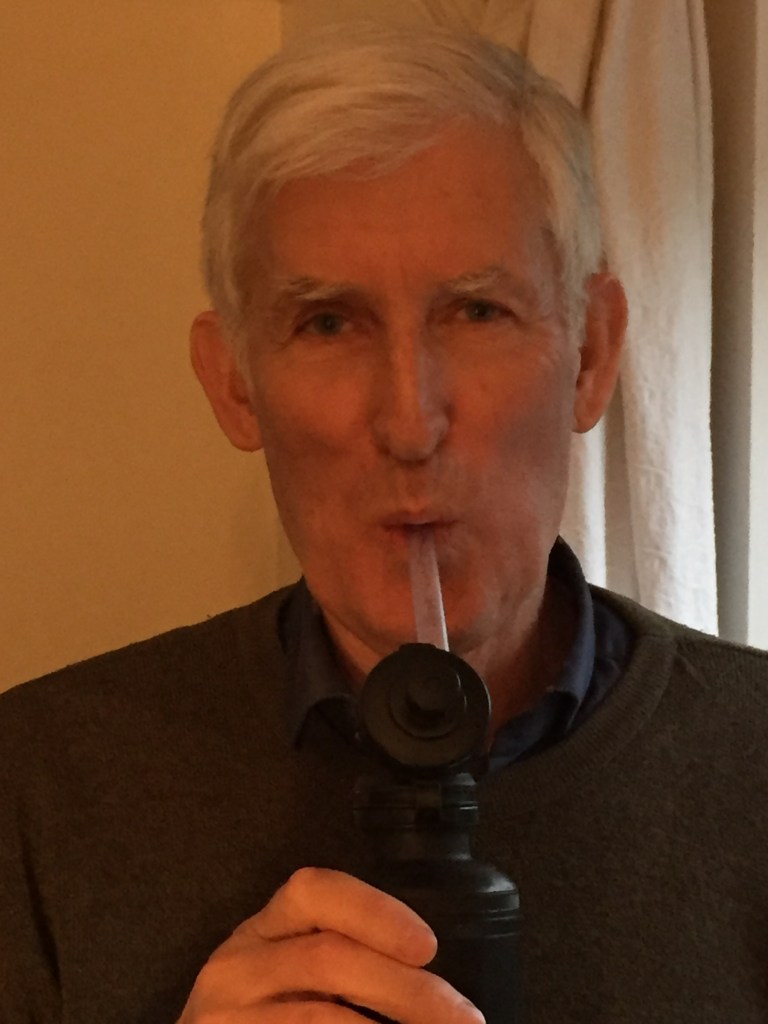
In the video, Georgie, a teenage student uses the phonation tube to sing the five note warm-up. You’ll notice that here we have used a pint glass which means it’s really easy to see her breath output – if this falls, we know that her support is not working as well as it needs to. In the glass, there is quite a large depth of water, this makes her breathing support muscles work harder (the less depth, the less resistance and the easier it is). Working with the tube we are looking for bubbles, for air flow and to provide pressure above the cords to help them close more efficiently without the pressure underneath the cords becoming too much – essentially balancing the pressure both sides of the vocal cords. Abdominal support is added cumulatively as we approach the end of the breath. The sound output is quite small in this instance as producing a large sound is not the point of the exercise. We’re aiming for an unbroken legato which is in tune and easy to produce. In the course of a minute, the voice is taken gently across an octave and through the upper passaggio. During the tube use, it lets the student focus on other issues rather than the sound they are producing. These issues can be breath focussed or on the shaping part of the technical process, where we attempt to consciously open the back of the throat fully to create space for the free vibration taking place.

After this exercise we might try the same exercise again, without the tube, trying to recreate the freedom the tube characteristically gives and to replicate any of the lessons learned by tube-use, whatever they may be, on each occasion.
What is a phonation tube?

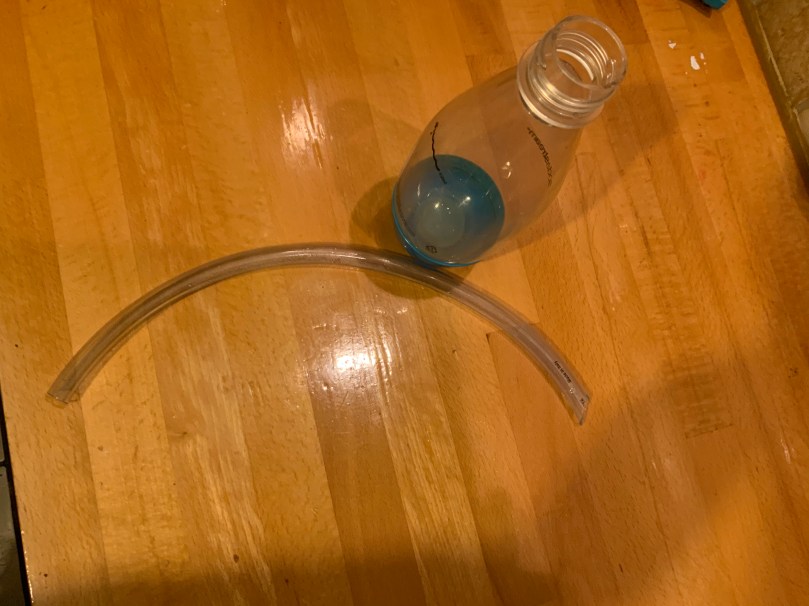
The phonation tube which we have used with our students uses the same dimensions as the lax vox(c); a device, named and advocated by Marketta Sihvo, a Finnish Speech Therapist. It is not a branded product.

Simply it is a length (usually around 33cm long) of food grade silicone tubing, of 1cm diameter, widely available online and in hardware shops. A receptacle or bottle of water is the only other apparatus you need. None of this is specialist equipment.

In scientific circles, using a phonation tube is a SOVTE (Semi-Occluded Vocal Tract Exercise), there are a number of these out there, ranging from those which require something in the manner of a straw of smaller or differing diameters, to those which simply ask for tongue or lip trills. Our research has led us to affirm that this is a particularly effective way of assisting the vocal cords in adduction, or closing more efficiently. It can be used to warm-up, to relax the cords after a lot of use, or to help direct the singer to greater awareness of breathing techniques, relaxation of the facial muscles and also maximisation of resonance. It can also be used to help smooth over bad breaks in the voice. It is a popular therapy with Speech Therapists in the UK on the NHS.

As singing teachers who are passionate about what we do and the health of the vocal apparatus, we are sharing what we have found out, both in academic research terms, and practically. The feedback you read from users is from genuine students who have used and found the device helpful to their singing.

If you have an experience to share please send it to us.

Richard – phonation tube, the magical warm-up!

If, like me, you often open a bottle of red wine, pour and drink, you may know that a wine aerator really improves the taste of the wine. As you pour the wine through the specially designed “funnel” the wine draws air down through two long holes in the funnel and aerates it. I have carried out many blind tastings with friends and every time they can distinguish between the wine straight from the bottle and the aerated wine.

Now, of course, you could be patient, uncork the wine in good time and allow it to breath naturally. Same result, wine that tastes better after breathing.

There is, however, no way to uncork the human voice. Even hours spent chattering to friends and family will not warm-up your singing voice. You have to start gently and give it time to warm-up. This is where the magic phonation tube apparatus comes in. Blowing bubbles through a piece of plastic tube into a bottle (with the right depth of water) seems to “smooth” the voice quality. Although you still need to warm up the singing voice, the process is helped EVERY TIME, by using the phonation tube technique. So simple but so effective and all you need to carry with you is the tube. A bottle and liquid can be found anywhere.

So next time I am travelling without my wine aerator, and need to enjoy a glass of red wine, perhaps I will remember to carry my phonation tubing with me, and see if blowing bubbles into the wine will speed up the aeration process!

Seriously, a phonation tube helps every time with the warm-up process. What I need to test next is whether it will help the sound quality AFTER my singing voice is warmed up, and also (and I have no idea how to achieve this) whether the tube improves not just voice quality in the warm-up process but long-term voice quality. Probably need some help from an interested university in researching this one. In return I can demonstrate the benefits of a wine aerator!

Richard