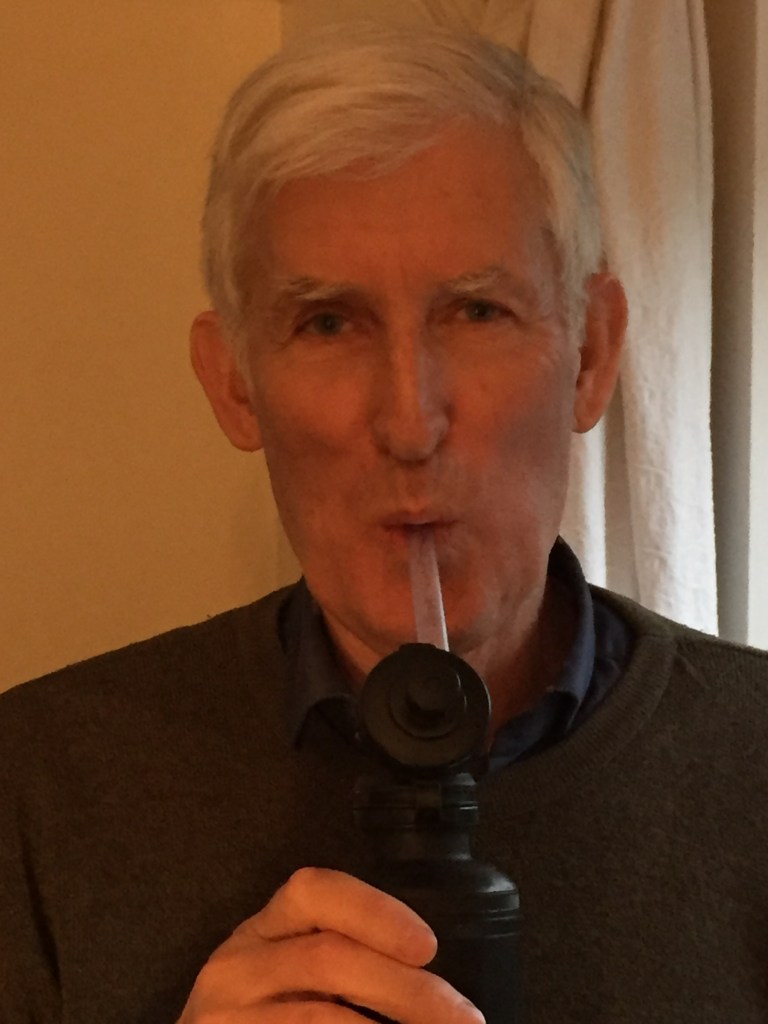
Singing and brass playing parallels

As the mother of two children gifted musically, and often needing to take them to various lessons, or support them in their musical activities, I am often struck at the parallels between singing technique and instrument specific technique.

You might think that it’s obvious the connection between singing and playing a brass or wind instrument as all these instruments are driven by breath. Therefore breathing is fundamental to success. However, I was reminded of that, watching Mike Lovatt the high-wire trumpet legend giving a masterclass today.

Mike encouraged students to sing their lines, in the way he wanted them to express the sound on their instrument, to feel more of a connection to the emotional intention of the music. He did so himself, indicating to a young trumpeter how to access a better inter-oral position by changing the vowel, which meant his tongue was in a higher position for a higher note.

The singing also was to help with the fluency of the line. I drum into my students that legato singing is a must and that sounds which stop and start are not only much more tiring on the voice, but also breath-wasting. Hearing even a tiny gap between sounds disturbs the line, expression, and emotional intent. Unfortunately lack of legato is a very difficult thing to hear as you sing yourself as the actual sound source and it typically takes students years to really understand what is required to produce that line, referred to humorously by Mr Lovatt as the ‘conveyor belt in a sushi bar, which carries on round and round, whether there are 2 or 10 dishes riding it’. Personally I refer to legato as a washing line, where the pegs are the consonants. You cannot remove the line from the pegs as they cannot exist without it – in the same way, the legato must not be broken by consonants. I think our choices of metaphor clearly show who has the more glamorous life!

Mike also mentioned the Valsava, basically a closed throat caused by a forceful exhalation, which can happen as result of too much tension in the lips, stopping the flow of air whilst trying to play high notes. Singers experience this kind of tension too, when ‘squeezing’ the throat rather than allowing the cords to stretch easily and sending too much air which triggers the natural constriction response. The idea of going up was coupled with the idea of thinking downwards, a strategy often employed by teachers to help singers to engage their abdominal support muscles.

Posture was also touched upon, the angle and height of the music stand, the elevation of the instrument. All very important issues for the aspiring singer who pokes their head forward or forgets that a long back of the neck and crown to the ceiling is important not just to the way they look, but also to the freedom of their voice.
Musings of a singing teacher

Over the course of my career I have come into contact with a great many singing teachers. It is a profession where there are many choices, and those choices can be bewildering, especially when you have limited understanding of what is good at the beginning of your singing journey.

There are many different ways to approach teaching and not all of those approaches work for all people. The success of your relationship with your teacher can be based on personality interaction.

I believe that singing teaching is a unique type of musical instrument teaching. Your teacher is dealing directly with you on what is an extremely personal level, as the voice is not at one remove, as with other instruments. We cannot see your instrument. We hear the issues, watch how you produce your voice and troubleshoot. We lead you to a technique which can be difficult to appreciate oneself, because as the sound-source, students don’t always hear what the world hears when they sing. As educators, we sit back and listen hard, giving criticism which is necessary but sometimes very hard to take!

As a teacher, I deal with scepticism on a daily basis. That is a normal and natural part of being an aspiring and perhaps confidence-lacking student. It is our job to hear that scepticism and transform it into understanding. If what we say hasn’t made sense to our student, it is also our job to find as many ways as it takes to explain until that light- bulb moment takes place.

Understanding is needed on many levels. Intellectual understanding does not necessarily mean that the student is able, at that moment, to produce what is being asked for. Sometimes it may take a few days, weeks, months or even longer for the muscles to make the connection with the concept; it is then that physical understanding has taken place. As teachers we need to keep reminding our students the sensation, process and/or sound they are seeking until it becomes something they do naturally.

Sometimes, our students do not believe in themselves. They need us to show our confidence in them that they can make the technical and expressive improvements we advocate. They need to trust that we have a fuller picture of their progress and we know what their next step should be.

An essential part of my job is to appreciate that I can also learn; each student brings a completely unique set of variables to the process and it’s this mixture which makes my work so interesting and rewarding. Whether it’s confidence, sound, breathing, tuning or another issue, each small notch of progress, from every student, is thrilling to me.

It is not always the students with the best voices which surprise and thrill. In my first years of teaching, I taught a student who began with a very unimpressive instrument. Breathy, weak and often out-of-tune. At the time, I felt that I could make improvements, but not change the nature of the voice. Several years later, one of the most beautiful voices emerged in the style of a butterfly. It taught me that one should never pre-judge what developments a voice can make.

One thing is very clear; everyone can improve their voice and the way in which they use it. Singing lessons are so much more than that…..

More to follow….

Phonation tube sirens

Here you see a lovely student demonstrating siren slides of a fifth which can be used as a warm-up on the phonation tube.

Notice how important it is to take time over the siren and to make sure the facial muscles are relaxed.

Hi I’m Harriet. I really benefit from using the phonation tube – it helps to open my throat and stops me from squeezing which gives me a better over-all sound and it takes the stress off my voice and makes it easier and more enjoyable to sing.

And breathe….

In the course of my teaching I work with a wide-ranging clientel, from those who are advanced students of singing, aspiring to a professional career in performing, to those who simply want to sing better. I have taught children as young as 7 and adults who are well into their 70’s. I have taught in classrooms and on courses and run workshops. It actually does not matter who your students are. They have one thing in common.

Breath is literally the life of their music. Finding ways to manage breath are not just as simple as putting a breath-mark in the score and breathing at that point. The way you approach that inspiration (and I use the word in more than one sense) is totally key to the success of the next phrase. If your previous phrase has finshed with your breathing out-of-control and in a panic, this affects the ability to move forward. Conversely if you are still holding breath at the end of the last phrase, just topping up can mean that you create tension in the voice and also are unable to control much of the air you have taken in.

One of my friends and colleagues over the years has been Paul Esswood, the counter-tenor. We once discussed the breath issues surrounding the alto aria ‘Esurientis’ from Bach’s Magnificat, which has an impossibly long instrumental-type phrase where breathing seems wrong. He attributed his ability to sing this phrase in one breath to preparation, at least a couple of breaths before the breath on which it is sung.

In addition to the mechanism of breathing-in, there is the emotional and communicative element of the music to add into the mix. Then, in performance, there are possible nerves, and other issues demanding our concentration. It is no wonder that almost all of us singers find difficulty with breathing at some point.

A wise singing-teacher once told me that the most control one has in singing is when one is not in control. In my humble opinion, she was right. The more you trust in the simple physical process and the emotional connections to your breath, the easier breathing, and singing becomes. If you have to ‘think’ too hard and there is a delay in the action, this causes a lack of fluency, adds inappropriate tension and control is lost.

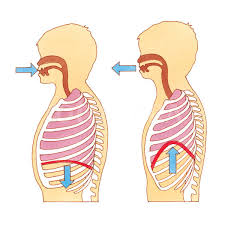
To arrive at this simple state however, is a more difficult process! It requires one to re-train lazy abdominal muscles to support the breath-pressure one needs and also then relax to allow full breath replenishment, align posture, release tension in the throat and facial muscles and understand the massive importance that the exhalation has to the next breath and therefore the resulting sound that it is then possible to produce.

Phonation tubes can have an impact on teaching students about how to release breath consistently and in a controlled manner. Because it is possible to see that breath being released in the form of bubbles, and, at this point, sound is of a secondary concern to that release, this feedback is invaluable. Some students have remarked that they can feel what they should be doing with their diaphragms in a real way for the first time, because until you know what you are doing, it feels hit-and-miss. The back-pressure provided by blowing the bubbles into water makes this magic happen. There is no sound to be desperately concerned about ( even the most gorgeous voice sounds like a gurgling baby’s) so it helps direct attention to what is happening within the body, which means that undesirable shoulder movements, chest-caving, protruding heads and other destructive tensions are clearer and therefore more easily rectified.

Kerry Boyle….discover your voice and sing with confidence….

As a singing teacher and choral director I am always looking for new ways to help stimulate and encourage students and choir members. I teach in various institutions including Canterbury Christ Church University where work with undergraduate and postgraduate singers and sometimes am lucky enough to bump into Michelle as she works with her students. Michelle has a great reputation and I am always impressed by her students, so obviously as I walked past her room one day in Spring of 2019 and saw one of her students apparently singing through a straw into a bottle of water, I was intrigued to say the least. It wasn’t just the physical activity that caught my attention, it was the fact that even though I couldn’t hear anything through the door, I could see that something important was happening for this student. I waited until we both had a break later in the day and asked Michelle what was going on! 
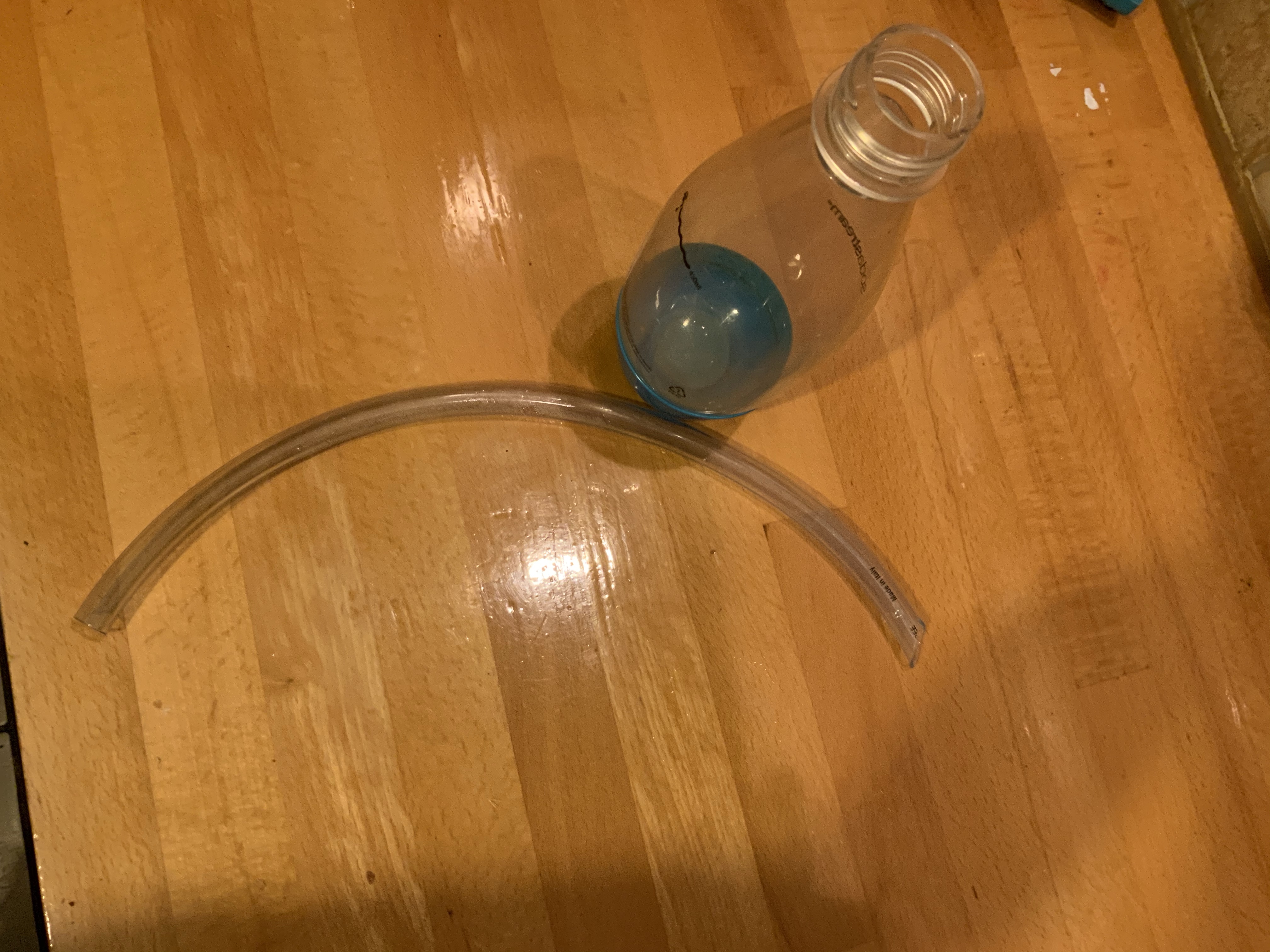
She explained how to use the Lax Vox(c) tube and suggested I have a go myself. I ordered some tubing (Michelle told me what I needed) and cut it to the right length and then had a go. Well…. the immediate freedom and ease was enough to convince me that this was something I should try with my students. 
Since then I have used the tube with students of every age and ability, in chamber choir rehearsals, group lessons, and individual lessons from beginner to advanced. For some of these students, the device has been transformative, allowing them to sing in way they never imagined and making my job so much easier. For others, the tube helps with tone, breath control, support and intonation and even the most sceptical are now converts.
I now share the benefits of the tube with other singing teachers, singers and students as I really think it is the most useful tool to help singers and students (whatever the age and ability) discover their voice and sing with confidence. 

What is a phonation tube?

The phonation tube which we have used with our students uses the same dimensions as the lax vox(c); a device, named and advocated by Marketta Sihvo, a Finnish Speech Therapist. It is not a branded product.

Simply it is a length (usually around 33cm long) of food grade silicone tubing, of 1cm diameter, widely available online and in hardware shops. A receptacle or bottle of water is the only other apparatus you need. None of this is specialist equipment.

In scientific circles, using a phonation tube is a SOVTE (Semi-Occluded Vocal Tract Exercise), there are a number of these out there, ranging from those which require something in the manner of a straw of smaller or differing diameters, to those which simply ask for tongue or lip trills. Our research has led us to affirm that this is a particularly effective way of assisting the vocal cords in adduction, or closing more efficiently. It can be used to warm-up, to relax the cords after a lot of use, or to help direct the singer to greater awareness of breathing techniques, relaxation of the facial muscles and also maximisation of resonance. It can also be used to help smooth over bad breaks in the voice. It is a popular therapy with Speech Therapists in the UK on the NHS.

As singing teachers who are passionate about what we do and the health of the vocal apparatus, we are sharing what we have found out, both in academic research terms, and practically. The feedback you read from users is from genuine students who have used and found the device helpful to their singing.

If you have an experience to share please send it to us.

Richard – phonation tube, the magical warm-up!

If, like me, you often open a bottle of red wine, pour and drink, you may know that a wine aerator really improves the taste of the wine. As you pour the wine through the specially designed “funnel” the wine draws air down through two long holes in the funnel and aerates it. I have carried out many blind tastings with friends and every time they can distinguish between the wine straight from the bottle and the aerated wine.

Now, of course, you could be patient, uncork the wine in good time and allow it to breath naturally. Same result, wine that tastes better after breathing.

There is, however, no way to uncork the human voice. Even hours spent chattering to friends and family will not warm-up your singing voice. You have to start gently and give it time to warm-up. This is where the magic phonation tube apparatus comes in. Blowing bubbles through a piece of plastic tube into a bottle (with the right depth of water) seems to “smooth” the voice quality. Although you still need to warm up the singing voice, the process is helped EVERY TIME, by using the phonation tube technique. So simple but so effective and all you need to carry with you is the tube. A bottle and liquid can be found anywhere.

So next time I am travelling without my wine aerator, and need to enjoy a glass of red wine, perhaps I will remember to carry my phonation tubing with me, and see if blowing bubbles into the wine will speed up the aeration process!

Seriously, a phonation tube helps every time with the warm-up process. What I need to test next is whether it will help the sound quality AFTER my singing voice is warmed up, and also (and I have no idea how to achieve this) whether the tube improves not just voice quality in the warm-up process but long-term voice quality. Probably need some help from an interested university in researching this one. In return I can demonstrate the benefits of a wine aerator!

Richard

Carol – it’s utterly brilliant and a vital tool in assisting the singing process

As a keen amateur singer, this simple device has opened a much welcome door for me in my learning. Blowing down the tube while phonating opens my throat to the ideal shape and size for good singing. In so doing, it makes my abdominals the prime driver of breath and effort, not my throat. By remembering the physical sensation of how my throat feels, I can replicate it without the tube in my subsequent singing. I know more or less if I’ve remembered the correct physical technique when I sing, because my abdominals will be doing the work, with my throat doing no other than staying open and clear. This helps me to sing for longer whereas before I would tire very easily.

carol without glasses using lax vox tubeAdditionally, I have a tendency to over-articulate consonants which does little for legato singing, and also makes singing more tiring. However, using the tube helps me to correct this because my adjusted throat and mouth position favours vowel sound delivery, with my lips doing the minimum required to form the obstructive consonants. So it helps me sing a smoother line.
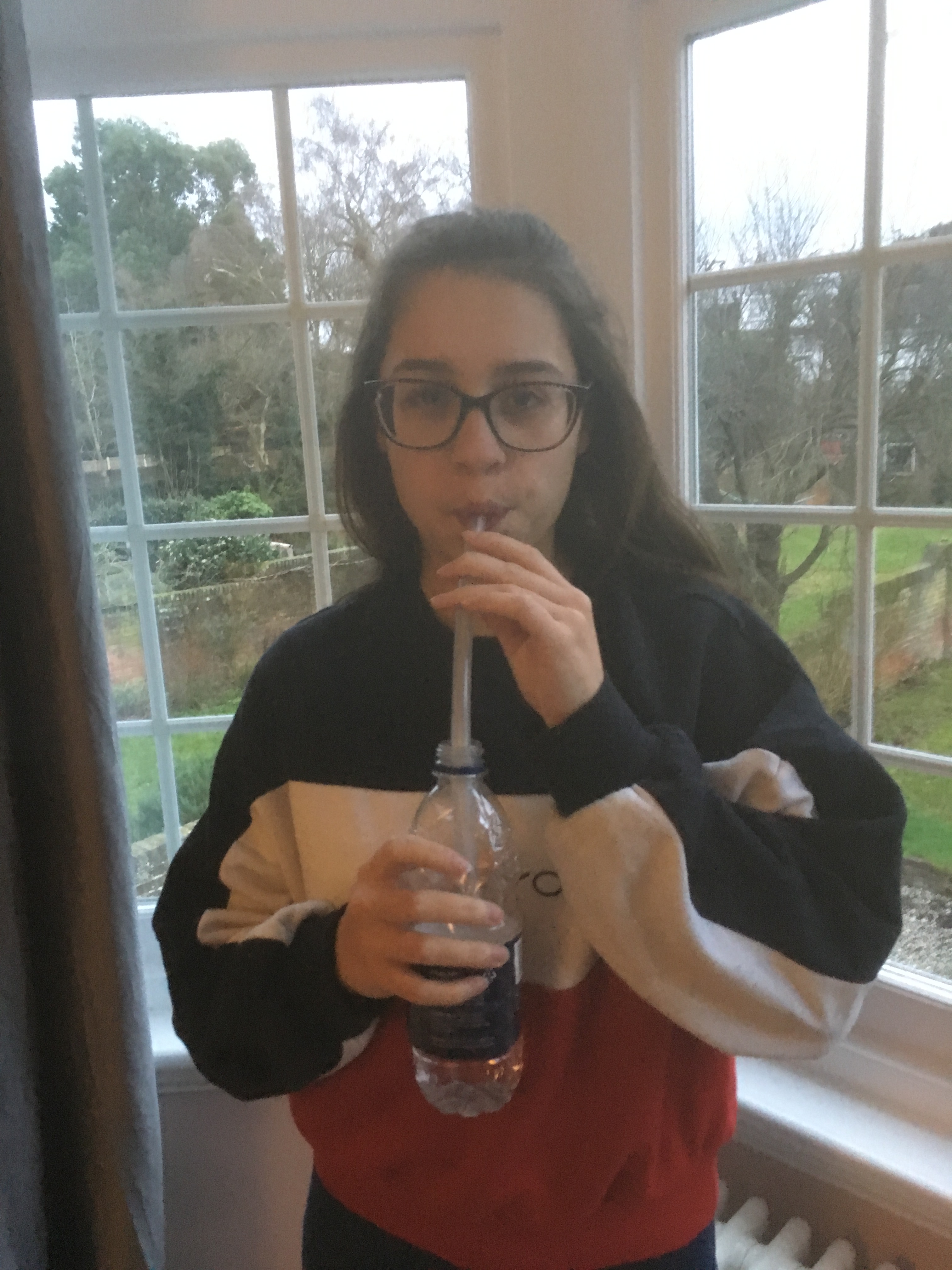
Lastly, after practising with the tube, both for warm-ups, and to run through individual songs, I find my tuning is much more accurate because it obliges one to sing with a good physical technique ie good abdominal support and open throat. I usually end a song in pitch. As a singing aid, I think it’s utterly brilliant and a vital tool in assisting the singing process.

Claire’s thoughts

Claire is 17 – the tube has had a transformative effect on her singing….

> The phonation tube has been so helpful for me personally! I used to have no confidence singing high notes and would try to stay well away from them whenever I could.

Now with the help of the phonation tube I can comfortably sing in a much wider range. It has helped me develop my voice so much and with such ease. It is so helpful with warming-up and practising and learning pieces as well, it has completely changed my voice and has made it much more relaxed and simpler to sing high notes for me.
>

Michelle Harris – where the phonation tube journey began

When I first came across the phonation tube, I was the biggest disbeliever you could imagine. I guess I thought ‘How can blowing bubbles into a tube possibly help anyone’s voice?’ It was, for me, an amazing moment when I took a tube and used it on my own, putting my prejudices aside.

The thing that struck me right away, was that I could hear and feel an immediate difference in my singing after only phonating with the tube for a few phrases. Both the quality of the sound and the ease with which I was able to sing was truly exciting and inspiring, quite apart from the obvious feedback I felt on the use of breath.

It was then that I began to research further (just with the intention of finding out more of why it was so effective and how people were using it). My journey initially took me to YouTube, where I watched this video which claimed, amongst other vocal health benefits, the lax vox was the best singing teacher you will find.

I wondered if this claim was supportable and I then decided that I would start to try using the device with some singing students to see whether these claims had any substance.

Kerry and I are both singing teachers at CCCU and at that time, we happily were teaching on the same days at thesame times in the same part of the music school. I happened to be using the lax vox with a student and, intrigued, Kerry peered through the door and later on asked what we were doing. She said at the time, she had found it fascinating to see that the tube-use had been an obvious help to the student, even though Kerry had not been able to hear what was going on.

This sparked an interest in us both to carry out some research with our students ranging from beginners to advanced conservatoire level singers, across the full age-range.